




Rwanda marks 32 years because the finish of the 1994 Genocide towards the Tutsi. The Liberation Day is commemorated each July 4, the date when the Rwanda Patriotic Entrance halted 100 days of killings and introduced one of many worst atrocities of the twentieth century to an finish.
To raised perceive how the genocide unfolded, the failures of the worldwide neighborhood, the experiences of survivors, and Rwanda's journey towards restoration and reconciliation, listed below are seven broadly acclaimed books by journalists, historians, students, and eyewitnesses.
ALSO READ: Govt to distribute new e-book on Genocide historical past for kids, youth
1. We Want to Inform You That Tomorrow We Will Be Killed with Our Households — Philip Gourevitch
American journalist Philip Gourevitch affords some of the influential accounts of the Genocide towards the Tutsi and its aftermath. Based mostly on in depth reporting and interviews throughout Rwanda, the e-book paperwork how a couple of million Tutsi have been systematically murdered through the 100 days of genocide.
The title comes from a letter written by a Tutsi pastor to his Hutu church chief, warning of the upcoming killings.
Past recounting the genocide itself, Gourevitch examines its lasting penalties, exploring the lives of survivors, perpetrators, and people concerned within the justice course of. He additionally displays on the immense challenges of rebuilding communities the place victims and perpetrators continued dwelling facet by facet.
2. Shake Arms with the Satan — Roméo Dallaire
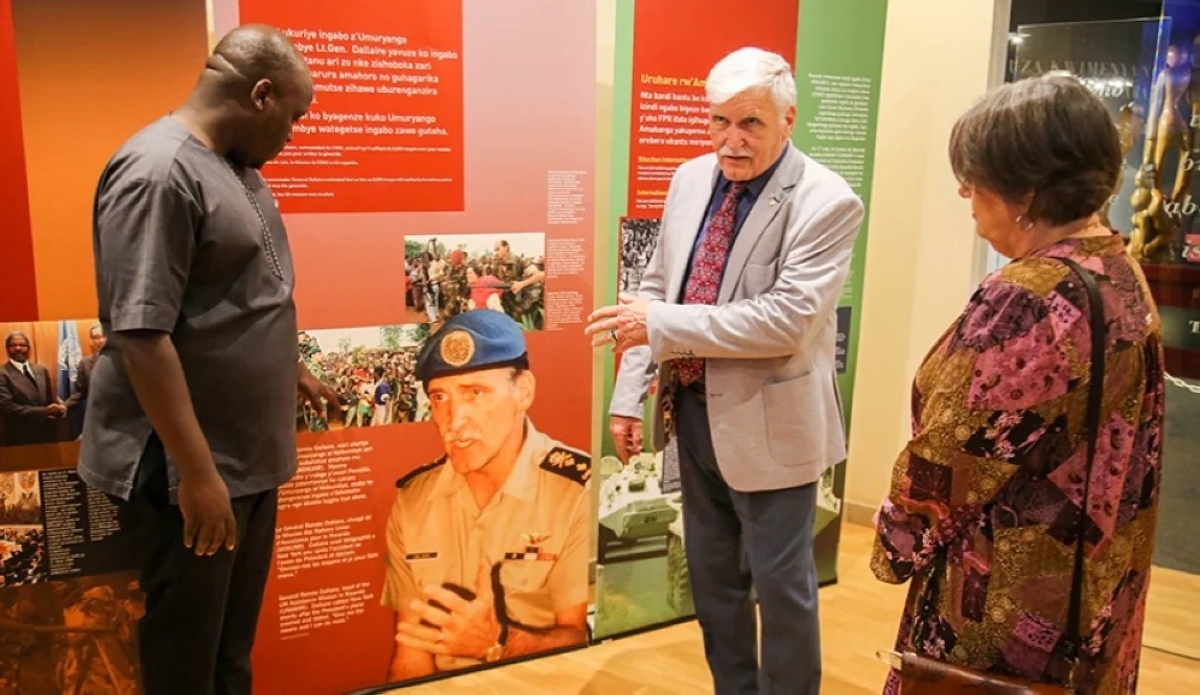
Written by Canadian Lieutenant-Basic Roméo Dallaire, the previous commander of the United Nations Help Mission for Rwanda (UNAMIR), this memoir supplies an insider's account of the worldwide neighborhood's failure to cease the genocide.
Dallaire recounts how a peacekeeping mission developed right into a humanitarian disaster, describing repeated however unanswered appeals for reinforcements because the killings escalated.
The e-book additionally chronicles the profound psychological influence the genocide had on him, together with his lengthy battle with post-traumatic stress dysfunction (PTSD).
3. A Individuals Betrayed: The Position of the West in Rwanda's Genocide — Linda Melvern
British investigative journalist Linda Melvern examines how Western governments and worldwide establishments failed to forestall the genocide regardless of receiving quite a few warnings.
The revised version incorporates three a long time of analysis, together with newly declassified archives and proof offered through the 2022 trial of Félicien Kabuga, broadly considered one of many principal financiers of the genocide.
Melvern retraces the occasions resulting in the genocide, paperwork the massacres at main memorial websites, and highlights the efforts of UN peacekeepers and humanitarian employees who remained in Rwanda regardless of the violence.
4. Intent to Deceive: Denying the Genocide of the Tutsi — Linda Melvern
On this follow-up work, Melvern explores the organised marketing campaign to disclaim and deform the historical past of the Genocide towards the Tutsi.
Drawing on authorities archives and in depth analysis, she examines how genocide planners and their allies used disinformation throughout and after the killings to rewrite historical past and undermine established information.
The e-book additionally exhibits how genocide denial continues to have an effect on survivors by dismissing their experiences and complicating efforts towards justice, remembrance, and reconciliation.
5. The Genocide towards the Tutsi, and the Rwandan Church buildings: Between Grief and Denial — Philippe Denis
Historian Philippe Denis examines the position of Christian church buildings earlier than, throughout, and after the genocide.
Utilizing interviews with survivors, clergy, former officers, and church archives, Denis explores the contrasting responses inside non secular establishments. Whereas some monks, pastors, and believers risked their lives to guard Tutsi, others collaborated with the genocidal regime.
The e-book discusses the Catholic Church's inner debates, the Presbyterian Church's 1996 confession of guilt, and features a case research of the La Crête Congo-Nil parish led by French priest Gabriel Maindron, whose conduct through the genocide has been questioned by survivors.
6. Sans ciel ni terre, Paroles orphelines du génocide des Tutsi— Hélène Dumas
French historian Hélène Dumas, a researcher on the French Nationwide Centre for Scientific Analysis (CNRS), presents some of the shifting collections of survivor testimonies.
The e-book relies on greater than 2,000 notebooks written by 105 genocide orphans aged between eight and twelve. The writings, collected by way of an initiative launched by AVEGA in 2006, protect the youngsters's personal phrases as they recount life earlier than, throughout, and after the genocide.
Their testimonies reveal the trauma of persecution, displacement, and loss. Some kids described themselves as “standing lifeless,” whereas others recalled surviving in forests the place, as one little one wrote, “The snakes have been our pals… They have been good neighbours to us, whereas people had deserted us.”
7. Rwanda Since 1994: Tales of Change — Hannah Grayson and Nicki Hitchcott
Edited by Hannah Grayson and Nicki Hitchcott, this assortment examines Rwanda's transformation since 1994 by way of essays, testimonies, and artistic writing.
Quite than focusing solely on the genocide, the e-book explores Rwanda's evolving social, cultural, and political panorama. Contributors from disciplines together with regulation, anthropology, training, literature, and African research mirror on how remembrance intersects with nationwide improvement and broader regional change.
The quantity additionally amplifies voices which might be typically underrepresented, together with members of the Twa neighborhood and kids of genocide perpetrators, whereas inspecting points comparable to faith, gender, id, and reconciliation in modern Rwanda.


