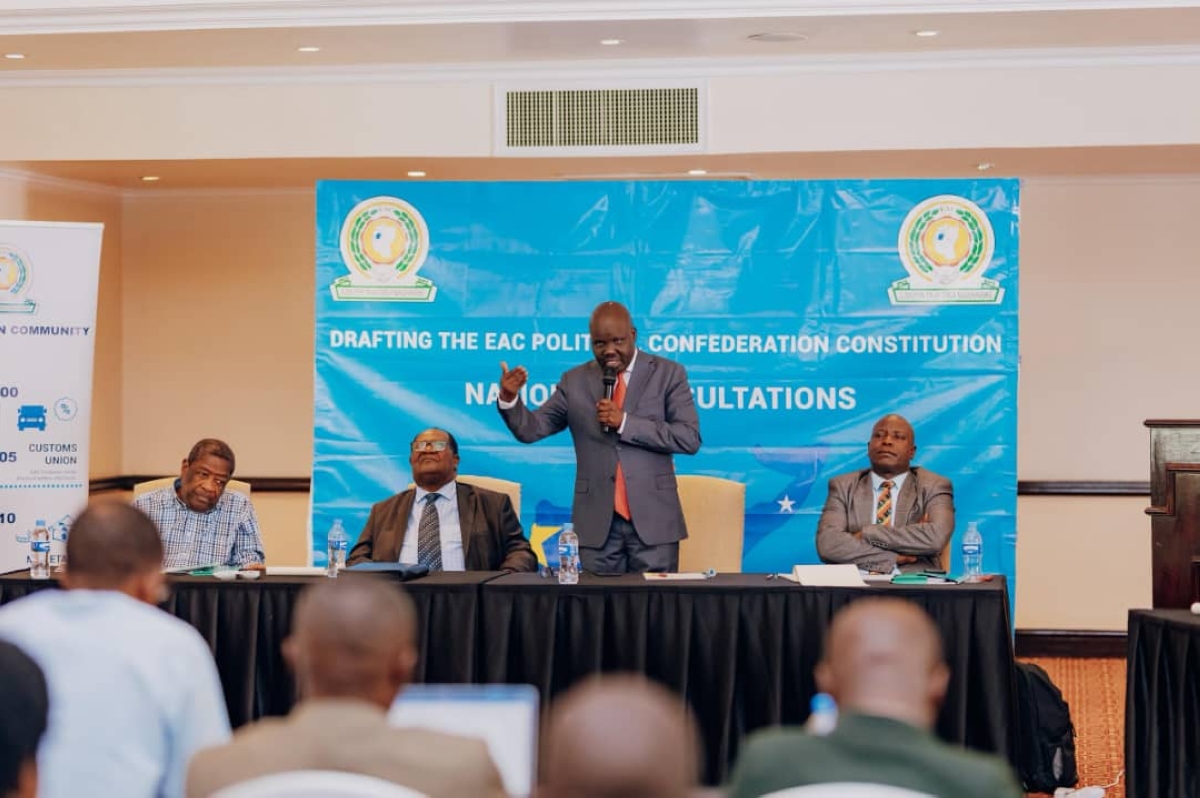




Residents of Rubavu District in Western Province have urged regional specialists to prioritize free motion within the ongoing Rwanda consultations on the draft East African Group (EAC) Political Confederation Structure.
The decision at no cost motion of individuals, items, and companies emerged as one of many suggestions throughout consultations held in Rubavu on Monday, June 22.
The session introduced collectively Western Province Governor Jean Bosco Ntibitura, district officers, representatives of the Joint Motion Growth Discussion board (JADF), civil society, tutorial establishments, and constitutional specialists from EAC member states who had been gathering views on the proposed confederation framework.
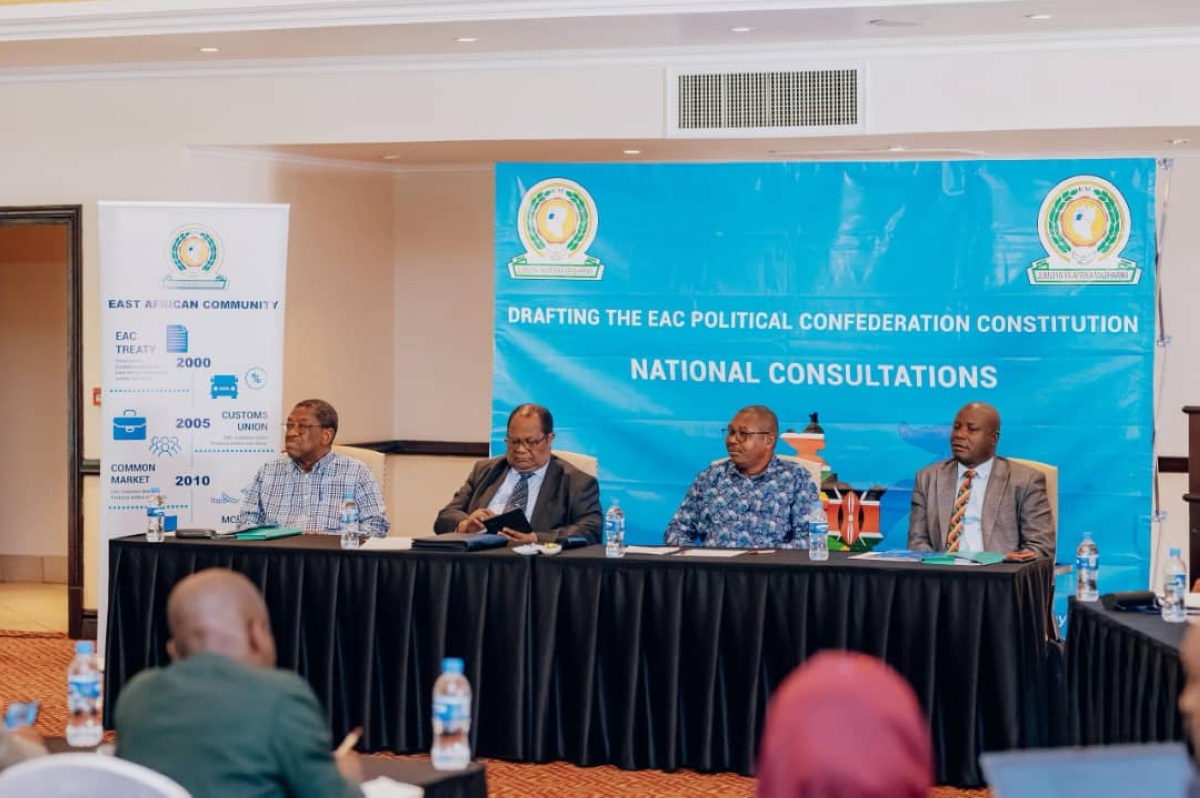
ALSO READ: EAC begins Rwanda consultations on political confederation
A confederation is a union of sovereign states that retain substantial autonomy, whereas a federation vests better authority in a central authorities. The proposed EAC political conferedeation will probably be a transitional step towards a political federation.
The consultations, which started in Kigali on June 15, will probably be performed in different secondary cities, together with Huye in Southern Province and Nyagatare in Japanese Province earlier than concluding on June 27. The EAC specialists are gathering views from a cross-section of residents throughout the nation.
“The Confederation Structure should prioritize the free motion of individuals, items, and companies amongst member states,” mentioned Jean Bosco Tuyishime, Chairman of the Pan-African Motion in Rubavu District.
He mentioned that the profitable ought to pave the way in which for enhanced regional commerce and financial integration.
In accordance with Tuyishime, regional integration can solely be achieved if member states stay united and keep away from selections like unilateral border closures.
“How can one nation get up and shut its border with a fellow member state, forgetting that we’re greater than pals and neighbors? We’re brothers and sisters,” he added.
He emphasised that cross-border cooperation is important for sustainable growth and aligns with the African Union’s free motion ambitions.
Contributors additionally raised considerations over insufficient highway and railway connectivity amongst EAC member states, obstacles to commerce, persistent insecurity in components of the area.
Shakiru Muhamadi, Director on the College of Tourism, Know-how and Enterprise Research (UTB), who participated as a part of the academia, pressured the necessity for authorized readability inside the proposed framework.
“The confederal framework should present clear laws cross-border commerce, regional funding, and the elemental rights and freedoms of EAC residents,” he mentioned.
“Historical past exhibits that authorized ambiguities in these areas usually turn out to be sources of disputes between states. When states conflict over commerce laws, it’s extraordinary residents and companies in border communities whose livelihoods, security, and commerce are instantly disrupted.”
The decision at no cost motion was echoed by Benjamin Odoki, Chairperson of the EAC Constitutional Consultants Committee and former Chief Justice of Uganda.
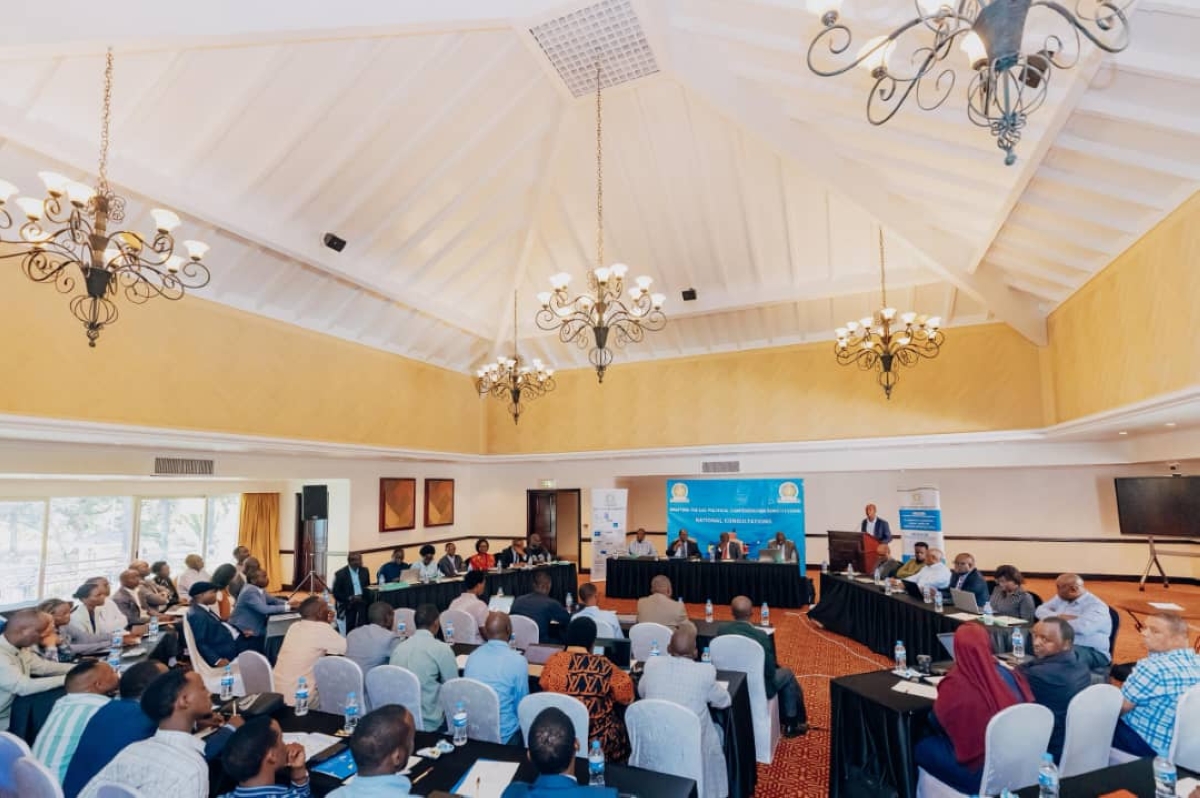
“We wish a borderless East African Group with free motion of individuals, items, and companies. That’s what we’re searching for,” Odoki mentioned in a media interview.
“We are not looking for obstacles. We wish individuals to maneuver freely and commerce freely,” he added, stressing that that is linked to the Frequent Market and the proposed single forex, that are additionally vital pillars of regional integration.
ALSO READ: EAC resumes Rwanda consultations on Political Confederation Structure
In the meantime, Andrea Aguer Ariik Malueth, the Deputy Secretary Normal of the EAC chargeable for Infrastructure, Productive, Social, and Political Sectors, counseled Rwanda's energetic participation in EAC affairs, expressing gratitude for the robust turnout on the consultations held in Rubavu.
“We’re glad for the end up right here in Rwanda, each in Kigali and Rubavu,” he mentioned. “That is an schooling on how Rwanda takes EAC issues and displays the willingness of its residents to take part within the constitution-making course of.”
Comparable consultations have already been accomplished in Burundi, Uganda, and Kenya.