




help providers throughout Rwanda, senators have recognized persistent challenges that proceed to restrict many individuals's entry to well timed and efficient justice.
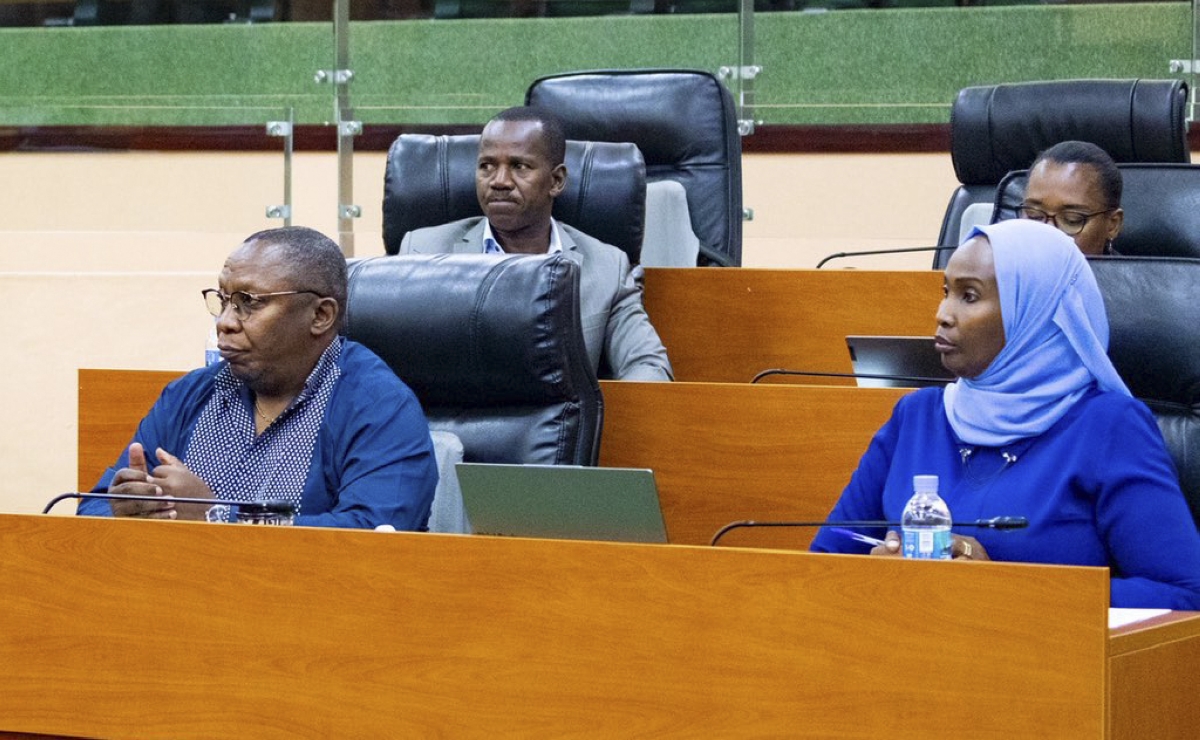
The issues emerged throughout a Senate plenary sitting on Thursday, July 23, as lawmakers thought of a report by the Senate Committee on Governance and Human Rights on the state of authorized help providers.
The report assessed establishments together with the Entry to Justice Bureau (MAJ), Abunzi committees, Isange One Cease Centres (IOSCs), and authorized assist for weak teams, together with folks with disabilities.
ALSO READ: Senators urge authorized reforms to repair gaps in entry to justice
Outdated legal guidelines create authorized gaps
The committee famous that Rwanda has but to enact key legal guidelines governing authorized help and mediation, regardless of each being supplied for beneath the 2014 Authorized Support Coverage and the 2022 Various Dispute Decision Coverage.
ALSO READ: 11 years on, Rwanda’s authorized help fund not but established—what went flawed?
Committee chairperson Alfred Gasana stated the absence of those legal guidelines has weakened coordination amongst authorized help suppliers and resulted in inconsistencies in service supply.
He stated the proposed laws would strengthen coordination, enhance service high quality, and set up a transparent authorized framework for authorized help providers.
Abunzi constrained by outdated mandate, restricted assets
The committee discovered that Abunzi, Rwanda's neighborhood mediators, proceed to function beneath a property worth threshold that now not displays present financial realities.
Their jurisdiction stays restricted to disputes involving property value as much as Rwf3 million, a threshold set in 2016 regardless of vital will increase in property values.
ALSO READ: Rwanda Bar Affiliation pushes for authorized help regulation
Gasana stated this has pressured many voters to take disputes to court docket as an alternative of utilizing free neighborhood mediation providers.
“Residents are now not benefiting as anticipated from the providers supplied by Abunzi as a result of the worth of properties has elevated considerably,” he stated.
Past authorized limitations, the committee stated many mediators lack computer systems, smartphones and different gear wanted to carry out their work effectively. In addition they face challenges assessing the worth of disputed property and travelling to dispute places.
Senator Hadija Ndangiza Murangwa stated authorities assist supplied round 2021, together with smartphones and bicycles, had improved mediators' work however was now not sufficient.
“In addition they want computer systems as a result of they’re nonetheless making ready reviews by hand,” she stated.
Low public consciousness of authorized providers
The committee discovered that many voters stay unaware of their authorized rights and the providers obtainable to them, growing the danger of shedding their rights or changing into dissatisfied with authorized selections.
It advisable steady authorized schooling for residents and native leaders on legal guidelines generally used to resolve disputes.
MAJ grapples with staffing and transport shortages
In response to the report, the Entry to Justice Bureau (MAJ) continues to face shortages of employees, restricted transport and low public consciousness of its providers.
These constraints scale back the bureau's capacity to succeed in folks in want of authorized help, significantly these in distant areas.
Weak coordination amongst authorized help suppliers
Senator Valentine Uwamariya stated coordination amongst organisations offering authorized help stays insufficient, with some establishments serving solely particular classes of beneficiaries or working in restricted geographical areas.
She stated stronger coordination could be crucial as the federal government seeks to cut back court docket case backlogs beneath the second Nationwide Technique for Transformation (NST2).
Extra assist wanted for folks with disabilities
Lawmakers additionally referred to as for stronger authorized assist for folks with disabilities, significantly these with listening to impairments.
Ndangiza welcomed progress in increasing signal language interpretation providers however stated extra capability continues to be wanted.
“There are at present greater than 40 individuals who assist these with listening to impairments, however there may be nonetheless room for enchancment,” she stated.
Responding to senators, Gasana stated consultations with the Rwanda Bar Affiliation confirmed there are at present 46 legal professionals offering authorized assist to folks with listening to impairments—a quantity the committee considers inadequate to fulfill demand.
Boundaries persist for victims of sexual violence
The committee additionally highlighted challenges going through Isange One Cease Centres, which offer built-in providers to survivors of gender-based violence.
These embrace delays in reporting circumstances, restricted public consciousness of obtainable providers, and cases the place victims conceal the identities of perpetrators.
It additionally famous that districts with multiple IOSC usually lack everlasting MAJ employees, limiting entry to authorized help.
Courtroom bailiffs want larger capability
The report discovered that non-professional court docket bailiffs proceed to face heavy workloads, insufficient authorized data and restricted digital expertise wanted to implement court docket selections.
It additionally cited inadequate data of the Built-in Digital Case Administration System (IECMS) amongst some justice sector actors as one other impediment to environment friendly service supply.
Issues over increasing authorized help
Whereas backing efforts to strengthen authorized help, Senator Evode Uwizeyimana cautioned in opposition to extending free authorized illustration with out clearly outlined eligibility standards.
He warned that doing so might put stress on public funds if demand exceeds obtainable assets.
Gasana clarified that the proposed authorized help regulation would specify classes of individuals eligible for authorized help slightly than making free authorized illustration universally obtainable.
“The regulation wouldn’t enable everybody to be helped. It might outline the classes of people that want authorized help,” he stated.
Subsequent steps
Following the talk, the Senate advisable expediting the drafting of legal guidelines governing authorized help and mediation, in addition to amendments to the regulation regulating the organisation, jurisdiction, powers and functioning of Abunzi committees.
Lawmakers stated the reforms would strengthen coordination amongst authorized help suppliers, enhance entry to justice, and guarantee authorized providers higher reply to the wants of weak residents.


