




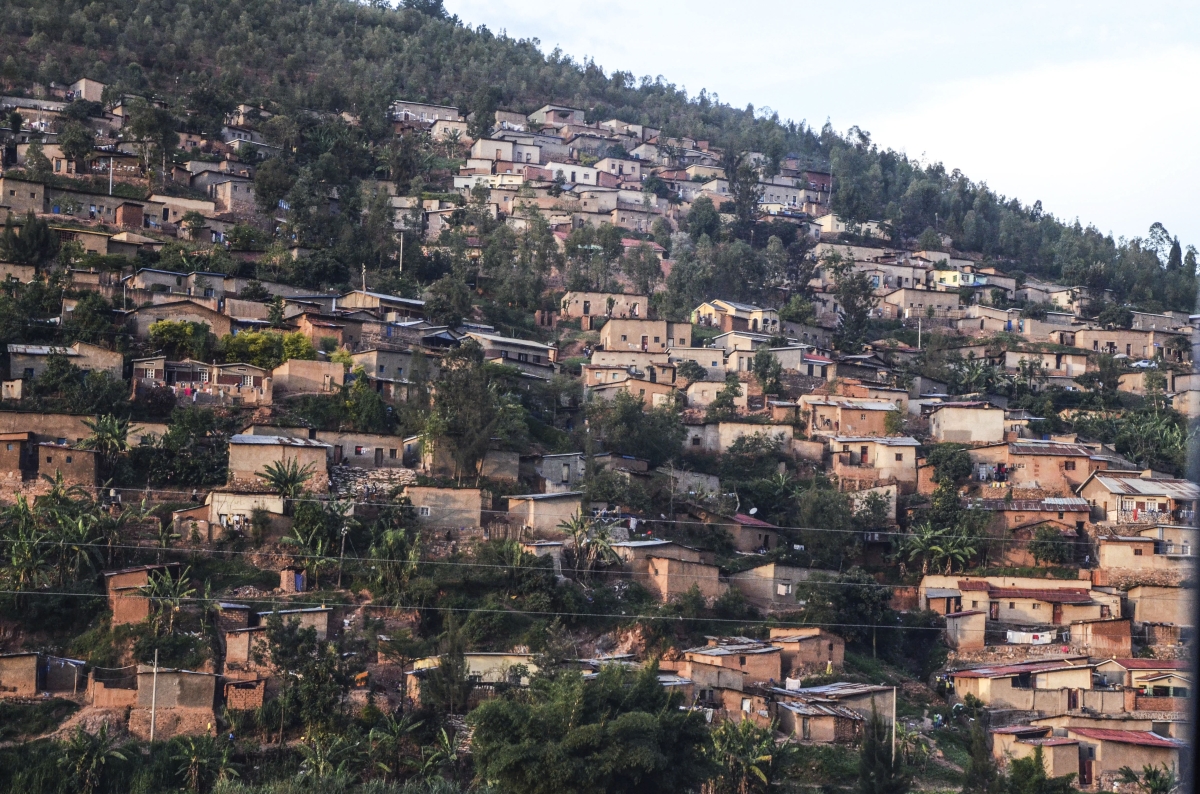
The Rwanda Housing Authority (RHA) is contemplating the in-situ upgrading mannequin as a sensible method to enhancing casual settlements on Mount Kigali, Mount Jali and Rebero Hill, prioritising the upgrading of present neighbourhoods moderately than relocating residents.
ALSO READ: Casual settlements on Mount Kigali, Jali, Rebero set for improve
The three websites—Mount Jali in Gasabo District, Mount Kigali in Nyarugenge District and Rebero Hill in Kicukiro District have lengthy been recognized as high-risk areas requiring structured redevelopment.
The Metropolis of Kigali beforehand mapped 2,328 hectares on Mount Jali, 1,658 hectares on Mount Kigali and 1,350 hectares on Rebero as precedence intervention zones.
Based on Emmanuel Ahabwe, Head of Social and Reasonably priced Housing Improvement on the Rwanda Housing Authority, the three settlements presently host 4,434 households, together with 2,889 on Mount Kigali, 1,044 on Mount Jali and 501 on Rebero.
With Rwanda's common family dimension estimated at 4 folks, between 17,736 and 26,604 residents may benefit from the deliberate upgrades.
ALSO READ: Casual settlements on Mount Kigali, Jali, Rebero set for improve
Ahabwe stated the in-situ upgrading method prioritises the supply of fundamental infrastructure inside present settlements as a primary step.
“It’s known as in-situ upgrading,” he stated, noting that the mannequin permits communities to stay in place whereas important providers are launched or improved.
He defined that the method is commonly possible in lots of casual settlements and sometimes begins with infrastructure growth earlier than broader redevelopment or rehousing interventions are thought-about.
In-situ upgrading refers back to the gradual enchancment of casual settlements to create a safer and extra liveable setting whereas minimising the displacement of residents. It additionally allows cities to reply to rising housing demand by supporting residents to enhance their houses.
The mannequin gives fundamental infrastructure corresponding to roads, pedestrian walkways, drainage techniques, road lighting, electrical energy, well being centres, markets, colleges and water providers.
ALSO READ: VIDEO: Nyabisindu rehousing undertaking creates 2,000 jobs
One of the vital notable examples is the Agatare Upgrading Venture, launched in 2018, which remodeled casual settlements in Biryogo, Agatare, Kiyovu and Rwampara.
These neighbourhoods host greater than 83 per cent of the over 26,000 residents of Nyarugenge Sector in Nyarugenge District, generally referred to as the Nyamirambo suburb.
The mannequin has since been replicated in different components of Kigali, together with Gatenga in Kicukiro District and Nyagatovu and Nyabisindu in Gasabo District.
In February 2024, the Metropolis of Kigali launched a €56 million initiative to improve casual settlements in Kinyinya Sector, Gasabo District, and in Rwezamenyo and Nyakabanda sectors of Nyarugenge District. Masking 230 hectares, the undertaking will present roads, road lighting, water provide, electrical energy, drainage techniques, markets and different important facilities.
“Rehousing can be doable, however we usually start with in-situ upgrading—that means infrastructure first, and rehousing or redevelopment later,” Ahabwe stated.
Commenting on the proposed upgrades for Mount Kigali, Jali and Rebero, Engineer Emmanuel Nsengiyumva, founding father of Avi Building and Engineering Companies (ACES), emphasised the significance of climate-resilient infrastructure.
“What I consider ought to obtain larger consideration is the event of correct drainage techniques, setting up roads with acceptable gradients, encouraging residents to plant bushes and supporting communities to construct sturdy embankments,” he stated.
He added that the rehousing mannequin will be efficient as a result of it permits residents to stay on their ancestral land whereas benefiting from safer, denser and better-planned housing developments.
Fashions that moved 150,000 households into deliberate settlements
Between 2017 and 2024, Rwanda upgraded settlements for 144,628 households that had been dwelling in scattered settlements, casual settlements and high-risk zones.
Throughout the identical interval, at the very least 20,643 households have been relocated from disaster-prone areas.
Ahabwe stated households moved from high-risk zones to built-in mannequin villages are nonetheless allowed to retain possession of their former land for productive actions.
One of many methods used to scale back unplanned settlements is the rehousing mannequin, which allows redevelopment with out forcing landowners to surrender possession.
Below this method, landowners pool their plots for redevelopment. For instance, seven households can mix their land to assemble multi-storey housing able to accommodating greater than 20 households on the identical web site.
The mannequin was carried out within the Gitega Sector of Nyarugenge District beneath the Mpazi Rehousing Venture and is presently being replicated in Nyabisindu, the place greater than 1,600 housing items are deliberate.
ALSO READ: Govt set to increase forest cowl on three Kigali hills
The Metropolis of Kigali plans to assemble 10,000 housing items between 2024 and 2029 as a part of efforts to improve casual settlements and increase entry to first rate housing for low-income and weak households.
The rehousing mannequin is predicted to play a key function in accelerating inexpensive housing growth.
Kigali goals to make sure that 90 per cent of its residents have entry to first rate housing by 2050.
Below proposals within the metropolis's grasp plan, residents who personal land in casual settlements can companion with non-public traders to redevelop their properties. Upon completion, traders allocate a part of the event or housing items to the unique landowners.
The federal government can be finalising a rent-to-own scheme geared toward serving to low-income earners entry inexpensive housing via gradual dwelling possession.
As well as, auxiliary residential items are permitted, permitting owners so as to add smaller housing items in a deliberate method that may assist accommodate lower-income households.
In contrast to the earlier grasp plan, the revised plan presents larger flexibility by permitting buildings to serve a number of functions.


