




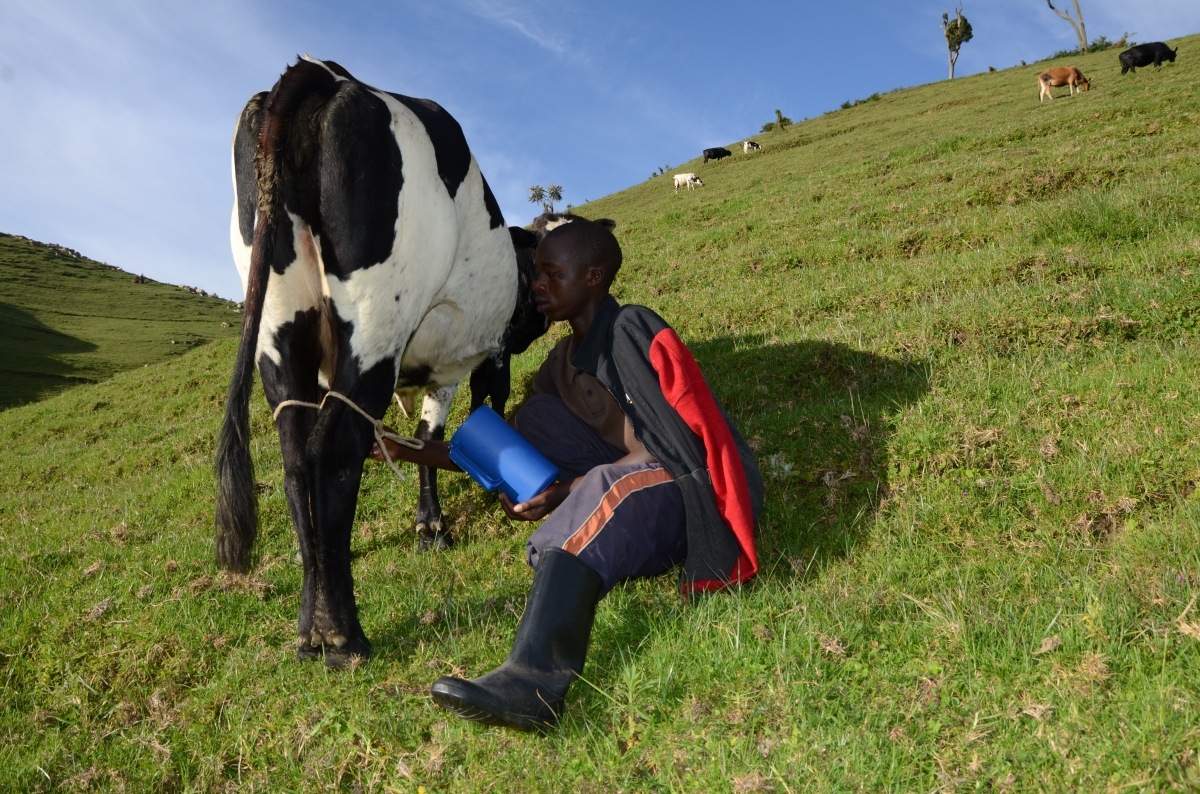
Officers at Rwanda Agricultural and Animal Assets Growth Board (RAB) have known as upon farmers to enhance milking hygiene in a bid to curb mastitis, a illness affecting dairy cows and resulting in rejection of as much as 60 % of milk produced in components of the Northern and Western provinces by assortment centres.
“Mastitis is often attributable to micro organism that thrive in poor hygiene circumstances. These micro organism infect the udder of dairy cows and may contaminate the milk,” mentioned Fabrice Ndayisenga, Head of Animal Assets Growth and Illness Management at RAB.
ALSO READ: Breastfeeding woes: Dealing with mastitis
“Milk from contaminated animals is just not appropriate for processing,” he added.
Figures from the Ministry of Agriculture and Animal Assets (MINAGRI) present that the growing prevalence of mastitis amongst cattle within the Northern and Western provinces has led to 60 per cent of milk produced within the Gishwati space being rejected by milk assortment centres.
The losses are substantial, provided that Gishwati produces between 80,000 and 100,000 litres of milk every day.
Assessments performed by RAB discovered that some farmers fail to keep up correct hygiene requirements, together with cleansing cattle sheds and resting areas. Different poor practices embrace milking cows solely as soon as a day or milking solely two teats whereas leaving the opposite two untouched.
RAB has urged farmers to keep up hygiene in cattle sheds and resting areas, wash cows' udders earlier than milking, completely clear milking gear, and wash their palms correctly earlier than dealing with milk.
ALSO READ: Milk manufacturing to rise by 135% by 2029
Farmers have additionally been suggested to exploit cows at the very least twice a day. Based on consultants, milking solely as soon as every day will increase the danger of udder infections and different well being issues.
The issue can also be linked to some farmers treating animals themselves with out skilled veterinary steering.
In consequence, most of the medicines they use are both ineffective or improperly administered, inflicting hurt to the animals as a substitute of treating them.
Ndayisenga has subsequently inspired farmers to hunt the companies of certified veterinarians to enhance animal well being and modernise farming practices.
Farmers urged to take accountability
“Farming is a enterprise, and the proprietor of that enterprise is the farmer, not the veterinarian. As a public establishment, we offer coaching, recommendation and consciousness programmes. Nonetheless, farmers should take accountability for implementing good practices on their farms,” Ndayisenga mentioned.
He famous that many farmers are hardly ever current on their farms and as a substitute depend on informal labourers whereas managing operations remotely by cellphone.
ALSO READ: Rwanda’s milk manufacturing exceeds a million tonnes
He mentioned RAB plans to accentuate consciousness campaigns, present diagnostic instruments and proceed coaching farmers on mastitis prevention and remedy.
Whereas medicines can be found to deal with mastitis, he cautioned that remedy alone is inadequate if poor hygiene practices persist.
He added that farmers danger vital monetary losses if the illness is uncared for.
“Think about a cow value Rwf2 million or Rwf3 million. Whether it is saved in poor circumstances and develops persistent mastitis, the farmer might ultimately haven’t any possibility however to ship it to slaughter, the place it can fetch a a lot lower cost.”
ALSO READ: What $100 million mission means to Rwanda’s dairy business
Not like ailments similar to Foot-and-Mouth Illness, the place authorities interventions play a significant function, mastitis prevention largely relies on day-to-day farm administration practices, he mentioned.
What farmers say
Jean-Pierre Buhuru, a cattle farmer from Musanze District who operates within the Gishwati farming space spanning Rutsiro, Ngororero, Nyabihu and Rubavu districts, mentioned Mastitis is basically linked to the dearth of protected water, which stays a significant reason for poor hygiene.
“Water is just not obtainable on all farms. Improved entry to wash water would assist deal with many ailments related to poor hygiene,” he famous.
He added that coaching and consciousness campaigns are additionally important in addressing the issue of mastitis.
Abdul Karim Habiyaremye, a mannequin farmer from Rugerero Sector, mentioned they are going to comply with recommendation given to them to fight mastitis.
“Quite a few authorities programmes have helped us enhance our livestock farming practices. In consequence, a cow that used to value Rwf1 million is now value as much as Rwf5 million. Milk manufacturing has additionally elevated considerably, with a single cow producing as much as 25 litres of milk per day. We’ll proceed to comply with the recommendation we now have acquired so as to fight mastitis,” he famous.
Rwanda goals to extend every day milk manufacturing by about 135 per cent, from 2.9 million litres to six.8 million litres by 2029.


